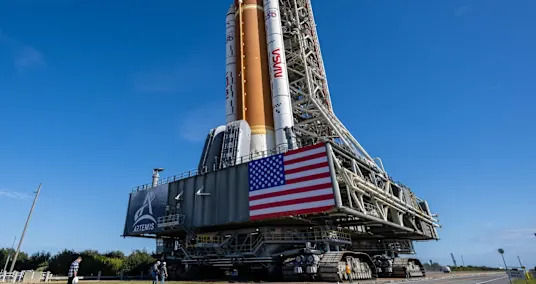
The four-person crew of Artemis II is at Kennedy Space Center in Florida preparing to lift off and travel to the moon as early as Wednesday — and getting ready for any hurdles space may throw at them.
The astronauts' round-trip space journey will cover nearly half a million miles over nine days. They will reach the moon, loop around its far side, and return to Earth. It will be the first crewed moonshot since 1972.
But space is inherently risky — and this is a test flight.
NASA plans for every scenario, and a global team of air force rescuers is on standby ready to come to the aid of the Artemis II crew if circumstances require it. The Air Force's Detachment 3 has coordinated contingency planning and astronaut rescues for NASA since 1959. Members of the unit train hard for a moment that they hope to never see.
"We absolutely never want it to happen," said Lt. Colonel Kevin Pieper, who oversees the unit.
CBS Saturday morning watched unit members conduct a simulation to retrieve astronauts after a mid-launch abort. Here's what the simulation looks like: A C-17 military aircraft hauling 15,000 pounds of rescue equipment heads to the splashdown site. The plane airdrops jet skis, inflatable boats and medical supplies, and a team of pararescue jumpers, or PJs, heads into the water.

The PJs gather the equipment, then bring it to the capsule itself and begin extricating the crew onto the life raft, which holds food, water, survival gear and medical equipment.
Jason Dykstra, a member of the rescue team, said jumpers have little idea what they'll find with the capsule or crew, so they have to prepare for every scenario and for days aboard the life raft.
"We have enough supplies to sustain those astronauts, medically speaking, until help arrives, until we can get them out of there and get them to a higher level of care," Dykstra said. "We are set up to survive in that environment for about 72 to 96 hours."
Multiple teams will be on standby when the Artemis II crew finally launches. Unit leader Pieper said there are several unknowns to prepare for, so every rehearsal helps. Backing up the crew of Artemis II is a "huge responsibility," he said.
"We are here to make sure that they get home safely, if, God forbid, something like this were to happen," Pieper said. "Everyone understands just how important what we're doing is, for not only for the safety of the crew, but for the mission."
Trump says he's extending a pause on Iran energy site strikes
latest_posts
- 1
 Manual for Individual accounting Rudiments for Fledglings
 - 2Cyber Monday streaming deals 2025: Grab the Disney+ Hulu bundle for only $5 and save over 60%
- 3Instructions to Explore the Universe of Vehicle Leases
- 4Vote in favor of your Number one natural product
- 5Volcanic eruption led to the Black Death, new research suggests


- Roman around the Christmas tree | Space photo of the day for Dec. 25, 2025
- Qantas and Virgin Australia Ban Power Bank Usage on Flights Following Safety Incidents
- When faith comes under fire: How Iran’s repression of religious minorities has increased
- Iran Used $2 Billion in Crypto to Run Its Militant Proxies in 2025
- Whale stranded off Germany for days free again
- Lightning on Jupiter could be up to 1 million times stronger than on Earth
- Startled Venezuelans express relief but also fear after Maduro arrest
- Climate change is straining Alaska's Arctic. A new mining road may push the region past the brink
- RFK Jr. guts the US childhood vaccine schedule despite its decades-long safety record